A Guide to Experiencing the Great Migration in Kenya and Tanzania
One of the world’s greatest wildlife spectacles — when experienced in the right way.
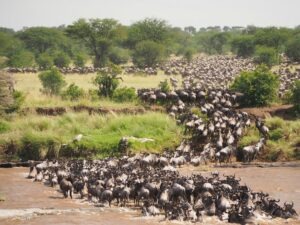
The Great Migration is often described as the ultimate safari experience. Over a million wildebeest, accompanied by zebra and gazelle, move in a vast circular journey between Tanzania’s Serengeti and Kenya’s Maasai Mara in search of fresh grazing.
It is extraordinary — but it’s also widely misunderstood.
For luxury safari travellers, the question isn’t simply “Can I see the Great Migration?”
It’s “Is this the right safari experience for me — and how do I experience it properly?”
This blog explains what the Great Migration really offers, when and where to see it, and — just as importantly — when a different safari experience might be even better.
What the Great Migration Really Is (and Isn’t)
The Migration is not a single dramatic moment that happens on cue. It is a constant, slow-moving phenomenon, influenced by rainfall, grazing patterns and instinct.
While river crossings make headlines, they:
- Don’t happen every day
- Aren’t guaranteed
- Often involve long waits
Some days are thrilling. Others are quiet. Understanding this is key to enjoying the experience — especially at a luxury level, where expectations are understandably high.
Where to Experience the Migration — A Luxury Perspective
Northern Serengeti (Tanzania)
From roughly June to October, the herds move north through the Serengeti, with potential river crossings along the Mara River.
For luxury travellers, the key is where you stay:
- Private or low-density concessions
- Camps positioned close to known crossing points
- Flexible guiding to move with the herds
Lodges such as Singita Mara River Tented Camp offer a refined base in this region, combining excellent guiding with a calm, understated atmosphere that suits luxury travellers well.
Luxury mobile camps and permanent tented camps in this region can deliver remarkable sightings — without the congestion often associated with central areas.
Maasai Mara (Kenya)
Typically July to September, the Migration spills into the Maasai Mara.
The experience here varies enormously depending on location:
- Core reserve areas can become very busy
- Private conservancies bordering the Mara offer a far more refined experience
Properties like Angama Mara, perched above the plains, demonstrate how the Migration can be experienced with both drama and serenity
Staying in a conservancy allows:
- Limited vehicle numbers
- Off-road driving
- Night drives and walking safaris
- A more intimate connection with the landscape
For many luxury clients, this makes all the difference.
When to Go — Timing with Realistic Expectations
The Migration doesn’t follow a calendar — it follows rain.
Rather than chasing a specific week, luxury safari planning focuses on:
- Being in the right ecosystem at the right time
- Choosing camps with excellent guides and flexibility
- Allowing enough time for patience and chance
Travelling with realistic expectations leads to far greater enjoyment than simply “hoping for a crossing.”
Do You REALLY Want to See the Migration?
This is an important — and often overlooked — question.
The Great Migration is spectacular, but it is not always the most rewarding safari experience, particularly if:
- You value solitude
- You prefer predator sightings over sheer numbers
- You want flexibility without crowds
Many luxury travellers ultimately prefer:
- Predator-rich private reserves
- Quiet concessions with consistent wildlife action
- Intimate sightings rather than mass spectacle
In places like Botswana, Zambia, or South Africa’s private reserves, wildlife encounters can be just as dramatic — often more so — and far more personal.
Migration vs Other Luxury Safari Experiences
A luxury safari is about how you feel, not just what you see.
Some travellers are thrilled by the scale and drama of the Migration. Others find their most powerful moments come from:
- Watching a leopard hunt at dusk
- Sitting silently as elephants pass close by
- Spending unrushed time with a single sighting
There is no “better” choice — only the right one for you.
Where to Stay — Why Lodges Matter So Much
During Migration season, lodge choice is critical.
The best luxury camps offer:
- Prime positioning near wildlife movement
- Highly experienced guides who understand Migration behaviour
- The ability to move plans day-by-day based on conditions
- Comfort, privacy and calm when the day’s sightings are over
At this level, the lodge doesn’t just support the safari — it defines it.
Is the Great Migration Right for You?
The Migration is extraordinary when approached thoughtfully. But it isn’t the only — or always the best — luxury safari experience.
That’s why personalised planning matters so much. Understanding what excites you allows the safari to be designed around your priorities, whether that’s the Migration, big cats, photography, or complete seclusion.
Start with the Right Guidance
If you’re considering a Great Migration safari, my Luxury Safari Guide is the ideal place to begin. It explains destinations, seasons, lodge styles and experiences — all through a luxury lens — and helps you decide whether the Migration truly fits your travel style.
And if it does, I’ll ensure it’s planned in a way that feels seamless, exclusive and deeply rewarding.